
Table of Contents
- How to Prepare Pets for Moving: Start Before the Boxes Come Out
- Build a Pet Moving Checklist and Essentials Bag
- Create a Safe Room and Keep Pets Secure During Packing
- How to Keep Pets Calm on Moving Day
- Plan Safe Transport and Temporary Care Options
- Pet-Proof the New Home and Help Pets Settle In
- How Long to Keep Cats Indoors After Moving (and Other Species Advice)
- Frequently Asked Questions
Last Updated: October 18, 2026
How to Prepare Pets for Moving: Start Before the Boxes Come Out
Most people pack first and think about pets later, backwards. These 7 tips for moving house with pets start two to four weeks before the first box appears.
At Mansa Movers, our crews work around animals, not through them, a calm pet makes moving day easier for everyone.
Here are the 7 tips for moving house with pets that actually hold up on the day.
Pet move preparation means settling routines, updating ID, gathering vet records, and building a safe space before the truck arrives.
Start with these early steps:
- Keep feeding and walking times the same, even mid-pack
- Set up the carrier or crate now, not on moving day
- Book a vet visit for records and any travel needs
One common mistake: packing the pet’s food and bowls into the moving truck. Keep those with you.
Line the carrier with a worn t-shirt of yours a week before the move. Your scent turns a strange box into a familiar spot, and most pets walk in on their own by day three.
Build a Pet Moving Checklist and Essentials Bag
A pet moving checklist keeps you from hunting for a leash in a stack of boxes. Build one bag that stays with you, not on the truck.
Pack these in a labeled bag or bin:
- Food for one week, plus bowls
- Any medication with dosing notes
- Leash, harness, and a spare collar
The photo matters: if a pet slips out, a current picture is the first thing a shelter or neighbour needs.
Simple timeline: two weeks out, vet visit and new tags; one week out, pack the essentials bag and test the carrier; two days out, wash bedding so it smells like home; moving day, the bag goes in your car, not the truck.
Create a Safe Room and Keep Pets Secure During Packing
Pick one room as the pet’s safe room for the whole move. A quiet space with a closed door beats letting a nervous animal roam the house.
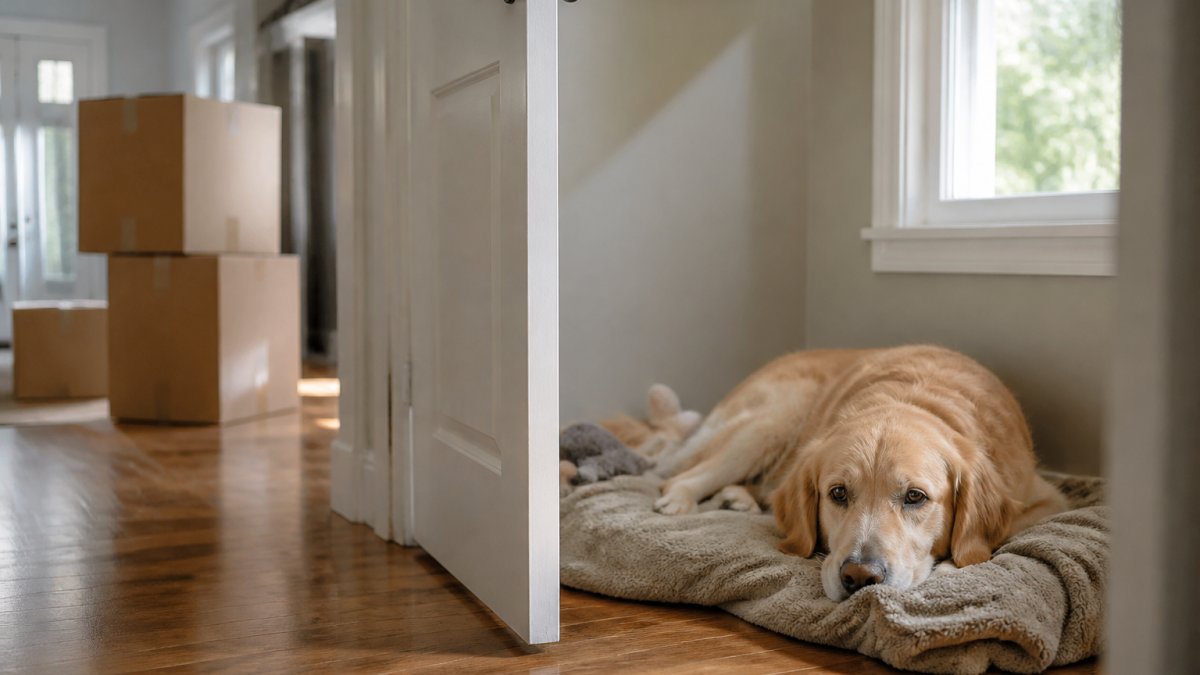
Fill it with water, a litter box or pee pads, a bed, toys, and something that smells like you.
This is the single biggest escape prevention step. Open doors, propped gates, and strangers carrying furniture are how pets get out.
During packing:
- Close the safe room before any exterior door opens
- Keep pets out of the room being packed
- Tell the crew which room is off limits
The most common moving-day escape is a pet bolting through a propped-open door while furniture is carried out. A closed safe room, plus a note for the crew, prevents almost all of these.
How to Keep Pets Calm on Moving Day
The short answer: keep the day boring. Same food, same walk time, same person checking in.
How to keep pets calm on moving day comes down to routine and distance from the chaos.
What works:
- Exercise before the crew arrives, so a tired pet rests
- Feed at the normal time, a little earlier if needed
- Keep the TV or radio on low in the safe room
What backfires: shouting across the house, moving furniture around a loose pet, or letting guests “say goodbye” to an anxious animal.
If your pet has severe anxiety, talk to your vet before moving day, some pets do better with a short-term professional plan.
Plan Safe Transport and Temporary Care Options
Two decisions shape the drive: how the pet travels, and who watches them while the truck is loaded. Settle both at least a week ahead.
Car travel
For car travel, the safest setup is a secured carrier or a crash-tested harness. A loose pet is a distraction and, in a sudden stop, a projectile, movers often skip this on short drives, then spend the first hour chasing a cat that slipped out of an open car door.
- Use a hard-sided carrier for cats and small pets, secured with a seatbelt or wedged on the floor behind a seat so it cannot slide.
- For dogs, choose either a crash-tested crate or a harness rated for vehicle use. A regular walking harness is not a restraint.
- Practice short drives a week ahead, five minutes, then fifteen, so the carrier is not new on the big day.
For a long-distance move, plan shorter legs with water and bathroom breaks. Cats and small pets stay in the carrier at stops, never open it at a rest area. Dogs get a leash and a quick walk away from traffic.
Air travel
For air travel, check the airline’s rules early and confirm again close to the date, carrier size limits, health certificate requirements, and breed restrictions change.
Crossing into another province or country? Ask your vet about health certificates and import rules well in advance, a missing certificate can ground the trip at the border. For international moves, check the destination’s requirements directly, not a forum post.
GET YOUR FREE MOVING QUOTE Today →
Temporary care options
Temporary care for moving day itself, a pet sitter or boarding, keeps your pet out of the loading zone entirely, removing the day’s biggest escape risk. Weigh the options against your pet’s temperament:
- Boarding kennel for the day of the move, best for pets that already handle kennels well; book early, since moving season fills up.
- A trusted friend or family member, best for anxious pets that know the person; leave written feeding and medication notes.
- A pet sitter who can take the pet for the afternoon, best for pets that do poorly in unfamiliar facilities; ask for a meet-and-greet first.
Whichever you choose, drop the pet off before the crew arrives and pick them up after the truck leaves, away from open doors, loud loading, and furniture blocking the hallway.
Pack a small “travel day” pouch separately from the essentials bag: a leash, waste bags, a folded towel, a water bottle, and a copy of the vet records. It stays in the cab with you, not in the trunk or the moving truck.
Pet-Proof the New Home and Help Pets Settle In
Set up the new home before your pet walks in.
Then pet-proof the space:
- Check for gaps under fences and loose screens
- Secure cleaning products and medications in closed cupboards
- Look for exposed cords and small objects on the floor
Gradual introduction works better than a full tour.
Supervision matters most in the first week. Watch doors, gates, and balconies. A pet in a new place doesn’t know the boundaries yet.
Keep familiar surroundings close: same food, same bowls, same blanket, same walk times. Reassurance helps, but routine helps more.
The first 72 hours in a new home set the tone. Keep the pet in one room, keep the routine identical, and introduce the rest of the house slowly. Most pets settle within one to two weeks.
How Long to Keep Cats Indoors After Moving (and Other Species Advice)
Most moving guides stop at cats and dogs, leaving birds, rabbits, reptiles, fish, and small mammals to improvise, and those pets often handle a move worse, because a new environment can disrupt heat, light, humidity, and social contact at once. This section covers the cat question first, then species-specific guidance the standard tips skip.
Cats: how long indoors
How long to keep cats indoors after moving: plan for at least two to four weeks; some cats need longer. A cat that doesn’t know the new area is far more likely to get lost if let out early, and one that slips out in the first week may not find its way back to an unfamiliar door.
During that time:
- Keep the cat in the safe room for the first few days
- Let it explore the house room by room
- Sit with it during meals and play sessions
When you do open the door, do it supervised and short at first. Many owners build up slowly over several weeks, starting with a harness or a secured enclosure before free access.
Dogs
Dogs settle through walks. Start with short, on-leash walks around the new block so they learn the smells and routes. Keep them leashed until recall is reliable in the new area, a dog that recalls perfectly in the old neighborhood may not with new distractions. Feed and walk at the same times as before; routine does more for a dog’s sense of safety than a new toy.
Birds
Birds are sensitive to noise, light, and drafts. Keep the cage covered during transport and the first day, in a quiet room away from unpacking zones. Sudden changes in light and temperature are the main stressors. Keep the cage away from kitchen fumes and open windows, and maintain the same feeding and light schedule from day one. For social species, sit near the cage and talk quietly rather than handling heavily in the first days.
Rabbits and small mammals
Rabbits, guinea pigs, hamsters, and similar pets stress easily from handling and enclosure changes. Keep them in their own enclosure with familiar bedding during the move, and resist letting them “stretch” in an unfamiliar room. Set up the enclosure at the new place before letting them out, keeping the same bedding, hide box, and feeding schedule. Small mammals are escape artists, check the enclosure is secure before you set it down.
Fish
Fish are the most timing-sensitive pet on moving day. Move them last and set up the tank first at the new place. Keep filter media wet during transport to protect the tank’s bacteria, a dried-out filter can crash water chemistry and stress or kill the fish. Transport fish in bags or buckets with tank water, not tap water, and acclimate slowly at the destination.
Reptiles
Reptiles depend on heat and light cycles, and a broken cycle causes real health problems. Maintain heat and light schedules from day one. Transport reptiles in a secure, ventilated container with a species-appropriate heat pack, and set up the enclosure with the heat source running before introducing the animal. Don’t feed a reptile right before a move; digestion depends on temperature, and a stressed reptile may not digest properly.
Multi-pet households
Move pets one at a time into the new home. Reintroduce them slowly, especially cats, which can turn on each other after a stressful move. Keep separate safe rooms for the first day or two, then do short, supervised introductions with a barrier between them. A familiar blanket carrying the group’s scent can help.
Special needs pets
Pets on medication, seniors, and anxious animals need the quietest room and shortest exposure to chaos. Ask your vet for a plan before the move, and keep medication in the essentials bag with dosing notes. For a senior or disabled pet, set up the new home base before the move so ramps, low-sided litter boxes, or orthopedic bedding are already in place on arrival.
If a pet does slip out, act fast. Search close to home first, since most lost pets are found within a few streets. Post the recent photo, call local shelters, and check microchip details are current.
When to consult a veterinarian: before the move if your pet is on medication or has anxiety, and after the move if eating, drinking, or litter habits change for more than a couple of days. For birds and reptiles, a change in appetite or activity is worth a call sooner rather than later, because these species hide illness well.
Frequently Asked Questions
How long does it take a dog to adjust to moving to a new house?
Most dogs need a few weeks to settle into a new home. The 3-3-3 rule is a useful guide: about three days to decompress, three weeks to learn the new routine, and three months to feel fully at home. Keep feeding, walking, and bedtime schedules consistent from day one. Set up a quiet space with familiar bedding and toys, and introduce new rooms gradually. If your dog shows lasting anxiety, appetite loss, or destructive behavior beyond the first month, talk to your veterinarian. A pet moving checklist helps you keep these routines steady during the transition.
How long should cats stay indoors after moving house?
Keep cats indoors for at least two to four weeks after moving, and longer if your cat is anxious or the area is unfamiliar. This gives your cat time to learn the new home’s smells and layout before exploring outside. During this period, update the microchip and identification tag with your new address, and confirm the microchip registry has your current contact details. When you do let your cat out, do it supervised at first and during quiet times of day. If your cat seems stressed, extend the indoor period and consult your veterinarian.
How can I keep my pet calm on moving day?
Keep your pet’s routine as normal as possible on moving day: feed and walk at the usual times, and set up a quiet space away from the movers with familiar bedding, toys, and water. Consider boarding or a pet sitter for the busiest hours. If your pet is anxious, talk to your veterinarian ahead of time about options, including medication for travel or moving day. Use a secure carrier or leash during transport, and avoid letting pets loose in the new home until hazards are cleared. Familiar scents and calm reassurance help most pets adjust faster.
What should go in a pet essentials bag for moving day?
Pack a pet essentials bag with food and water for at least 48 hours, bowls, a leash and harness, a carrier, medication, veterinary records, waste bags, and a few favourite toys or a blanket. Include a copy of your pet’s microchip details and a recent photo in case of escape. Keep the bag with you rather than in the moving truck. This bag should be part of your pet moving checklist and packed before moving day so you are not searching through boxes when your pet needs something.
Moving with pets comes down to planning ahead and keeping the day calm. That’s where a crew that knows how to work around animals makes a real difference. At Mansa Movers, we offer an all-inclusive hourly rate with no fees for stairs, truck, or kilometers, so you know the cost up front. Our team handles packing, storage, and junk removal, and treats your home and your pets with care. Get your free moving quote today and plan a move that works for the whole household, pets included.