
Last Updated: October 31, 2026
Quick Summary
Stair fees are calculated in one of five ways: a flat charge per flight, a per-flight charge multiplied by crew size, extra labor time added to the hourly bill, a per-item surcharge, or a flat access surcharge per address. There is no industry-wide standard, so each mover writes its own rule into its contract.
- A flight is one continuous run of steps between two landings, so a two-storey walk-up with a mid-landing can count as two flights.
- A $25 per-flight fee becomes $150 on two flights if the mover multiplies by a three-person crew.
- Stair charges can trigger at both pickup and delivery, and some movers charge separately for each end.
- A short set of three or four steps to a porch is usually not a chargeable flight.
- Long carry fees often stack with stair fees when the truck cannot park close to the door.
Table of Contents
- What Counts as a Flight of Stairs for a Moving Company
- How Stair Fees Are Calculated: Per Flight, Per Crew, Per Hour
- Movers Extra Charges for Stairs and When They Apply
- Moving Quote Hidden Fees to Watch For
- Moving Long Carry Fees and Distance to the Truck
- How to Compare Moving Quotes Line by Line
- How Stairs Affect Labor Time, Safety, and Item Handling
- Get a Moving Quote With Stair Fees Built In
- Frequently Asked Questions
What Counts as a Flight of Stairs for a Moving Company
A flight of stairs is one continuous run of steps between two landings. Most movers count each full run as one chargeable flight, so a two-storey walk-up with a mid-landing can count as two flights, not one.
That matters because the definition is where disputes start. Two movers can look at the same staircase and count differently.
Why the Definition Varies Between Movers
There is no industry-wide standard. Each moving company writes its own rule into its contract, and the wording is often vague.
Common variations include:
- Counting only full floors, so a half-flight is free
- Counting every landing as a new flight
- Charging per flight but capping the total
- Charging a flat access fee instead of per flight
Ask for the rule in writing before you book. If a company cannot state its definition in one sentence, treat that as a warning sign.
How Stair Fees Are Calculated: Per Flight, Per Crew, Per Hour
Stair fees are calculated in one of five ways, and the method matters more than the headline number because two quotes with the same rate can produce very different totals. For the broader pricing context, see Moving Cost. The five models are: a flat charge per flight, a per-flight charge multiplied by crew size, extra labor time added to the hourly bill, a per-item surcharge for heavy or bulky goods, and a flat access surcharge applied once per address.
Here is how the models compare in practice:
| Method | How It Works | Risk to You |
|---|---|---|
| Per flight, flat | One set charge for each flight, regardless of crew | Predictable, easy to check |
| Per flight, per crew | Charge multiplied by number of movers | Grows fast with a bigger crew |
| Added labor time | Extra minutes added to the hourly rate | Depends on how slow the carry is |
| Per item | Surcharge on pianos, safes, or oversized furniture carried on stairs | Can stack with a per-flight charge |
| Flat access surcharge | One charge per address for stair access | Simple, but hides the per-flight math |
A Worked Example
Suppose a mover quotes a stair fee of $25 per flight. On a two-storey walk-up with a mid-landing, that is two flights, so the charge is $50. If the same mover multiplies by a three-person crew, the charge becomes $150 for the same staircase.
The lesson is not that one model is cheaper. It is that you cannot compare a per-flight rate against an hourly rate without converting both to a total. Ask each mover to state the total stair charge for your specific address, not the unit rate.
Why the Third Model Is the One Most People Miss
A mover quotes an hourly rate, then adds time for stairs. Your final bill depends on how long the carry actually takes, which you cannot predict. This model is common because it is easy to justify after the fact, but it is also the hardest to cap. Ask whether the added time is estimated in advance and whether it is capped.
A per-crew charge is not the same as a per-flight charge. Always confirm whether the quoted number is multiplied by the number of movers.
Movers Extra Charges for Stairs and When They Apply
Movers extra charges for stairs usually apply when the pickup or delivery point sits above or below ground level with no direct truck access. The key word is “or”: a stair fee can trigger at either end of the move, and some movers charge separately for each. Ground-floor units with a clear path to the door should not trigger a charge.
Stairs charges typically apply when:
- The unit is a walk-up above the first floor
- The move starts or ends in a basement
- The elevator is too small for large items
- The building requires a stair carry for oversized furniture
And they should not apply when a freight elevator is available and booked, when the unit is ground level with a short path, or when the charge was already built into a flat quote.
Pickup Versus Delivery: Two Separate Triggers
A common pattern is for a mover to charge stairs at both the origin and the destination. If you are moving from a third-floor walk-up to a ground-floor house, you may still pay a stair fee for the pickup. Ask each mover whether the fee applies per address or per move, and whether the two ends are charged separately.
A Few Steps Are Not a Flight
A short set of three or four steps to a porch is usually not a chargeable flight. Most movers define a flight as a continuous run between landings, so a few steps do not qualify. Confirm the threshold in writing, because some contracts count any elevation change.
Stairs Already Included in an Estimate
Flat-rate quotes often build stair access into the price. In that case, the fee is not separate, but it is still real, it is baked into the total. Ask the mover to confirm in writing that no stair charge will be added on moving day.
Some quotes list a stair fee as “if applicable” and then apply it on moving day. Get the condition written down, not the word “if.”
Walk-Ups, Basements, and Elevator Access
Walk-up apartments and basement units carry the highest risk of a stair charge. Elevator buildings are different: many movers charge an elevator fee or access fee instead, covering the time spent waiting for and loading the elevator.
How to Verify Stair Charges in a Written Estimate
Before you sign, work through this checklist:
GET YOUR FREE MOVING QUOTE Today →
- Confirm whether the fee is per flight, per crew, per item, or a flat access surcharge
- Confirm the definition of a flight in one sentence
- Confirm whether pickup and delivery are charged separately
- Confirm whether a basement counts as a flight
- Confirm whether there is a cap on the total stair charge
- Confirm whether the charge is already included in a flat rate
Questions to Ask Before Booking
Ask three questions before booking:
- Is there a charge for the elevator, separate from stairs?
- Does a basement count as a flight?
- Is there a cap on the total stair charge?
If a company cannot answer these in writing, treat that as a warning sign.
Moving Quote Hidden Fees to Watch For
Moving quote hidden fees rarely appear in the headline price. For a deeper guide on spotting and avoiding surprise charges, see How to Avoid Surprise Moving Costs. They show up in the fine print, on the day, or after the truck leaves. Stair charges are one of the most common.
Others to check for:
- Long-carry fees for distance from the truck
- Fuel or mileage surcharges
- Packing materials billed separately
- Heavy item fees for pianos or safes
- Weekend or after-hours premiums
Moving Long Carry Fees and Distance to the Truck
Moving long carry fees apply when the truck cannot park close to the door and movers must carry items a long distance. Most companies set a threshold, often around 15 to 20 metres, and charge beyond it.
This fee and stair fees often stack. A basement unit in a building with no loading zone can trigger both.
How to reduce the risk:
- Reserve a loading zone or driveway spot in advance
- Ask the building about mover access rules and elevator booking
- Measure the actual carry distance and share it with the mover
How to Compare Moving Quotes Line by Line
Comparing quotes line by line is the only way to see what a stair fee really costs you. A cheaper hourly rate with a per-crew stair charge can cost more than a higher rate with none.
Work through each quote in this order:
- Check whether stairs are included or added
- Confirm the definition of a flight
- Note the minimum hours charged
- Compare crew size and hourly rate together
- List every add-on fee in one column
- Ask what is capped and what is not
How Stairs Affect Labor Time, Safety, and Item Handling
Stairs add labor time, raise injury risk, and change how items are handled. A piano or a large sofa on a narrow staircase needs more movers, more time, and more care than the same item on a ground floor.
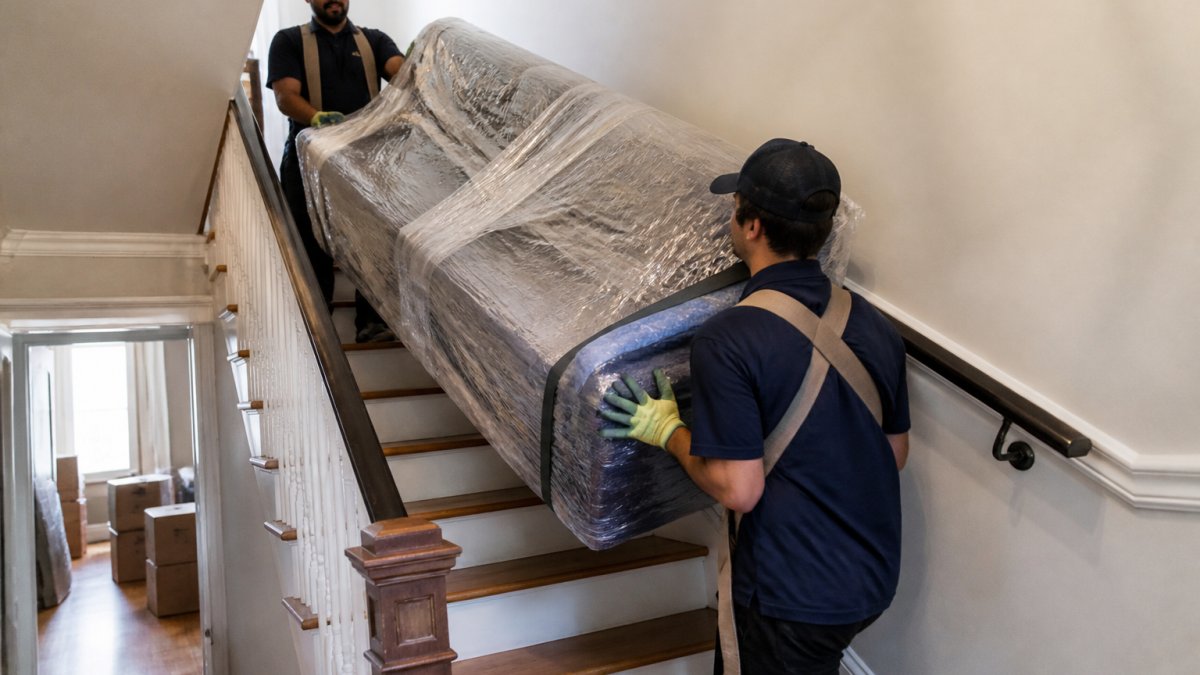
That is why some companies charge for stairs and others build it into the rate. The work is real either way. What differs is whether you see the cost up front or on the invoice.
Get a Moving Quote With Stair Fees Built In
The simplest way to avoid a stair fee dispute is to choose a mover with transparent, all-inclusive pricing. Mansa Movers uses an all-inclusive hourly rate with no fees for stairs, truck, or kilometers.
We handle packing, storage, junk removal, and long-distance moves, with a focus on protecting high-value items like pianos and antiques. Estimates are based on your individual needs.
When you are ready to see what your move would cost with stair access included, you can request a quote from Mansa Movers and review the details before you commit. You can also compare moving estimates that include stair charges upfront.
Frequently Asked Questions
Do moving companies charge extra for stairs at both pickup and delivery?
Many do. Stair fees are often applied at each location that involves a walk-up, so a third-floor walk-up at pickup and a second-floor walk-up at delivery can mean charges at both ends. Ask your mover to confirm in writing whether the fee applies per location or only once. Movers with an all-inclusive hourly rate, like Mansa Movers, build stair access into the rate so you are not charged separately at either address.
What counts as a flight of stairs for a moving company?
Most movers define a flight as a continuous run of stairs between two floors, typically 10 to 15 steps, ending at a landing or doorway. A split staircase with a landing can count as two flights. Outdoor steps to a porch, basement stairs, and garage steps may also be counted. Because definitions vary, ask your mover how they count flights and get the answer in your written estimate before booking day.
Can movers add a stair fee after giving a quote?
They should not if the quote was based on an accurate walkthrough. A stair fee added after the fact usually means the original estimate missed details about access. Protect yourself by describing every staircase, walk-up, and elevator in advance, and ask for a written confirmation that stair charges are included. If a mover surprises you with a stair fee on moving day, that is a sign the quote was not transparent.
How do long carry fees differ from stair fees?
Stair fees cover vertical access, meaning flights of stairs between your door and the truck. Long carry fees cover horizontal distance, usually charged when the truck cannot park close and movers must carry items more than a set distance, often 15 to 30 metres. Both can appear on the same move. An all-inclusive rate that covers stairs, truck access, and kilometres removes the guesswork from both charges.
Stair fees are one of the easiest charges to miss and one of the hardest to argue about after the fact. Mansa Movers removes that problem by quoting a single all-inclusive hourly rate with no stair, truck, or kilometer fees, backed by experienced movers who handle valuables with care. Get started with Mansa Movers and move with a price you can actually plan around.
