
Table of Contents
- Gather the Right Packing Materials for Fragile Items
- Prepare Your Workspace and Plan Your Packing Strategy
- How to Pack Dishes for Moving Without Breakage
- How to Pack Glassware for Moving Safely
- Techniques for Wrapping and Protecting Fragile Items
- Packing Fragile Items Checklist and Box Assembly
- Labeling, Insurance, and Unpacking Your Fragile Boxes
- Frequently Asked Questions
Last Updated: October 9, 2026
Gather the Right Packing Materials for Fragile Items
To pack fragile items effectively, you need to start with the right supplies. Cheap materials often fail when items shift during transport.
Here’s what you need before you start:
- Packing paper, Essential for wrapping dishes, glassware, and delicate objects. It’s affordable and reusable.
- Bubble wrap, Provides cushioning for high-value items and electronics. The air pockets absorb shock.
- Foam peanuts, Lightweight void fill that prevents items from moving inside boxes.
We recommend buying slightly more than you think you’ll need. Running short mid-pack means improvising with newspaper or towels, which offer poor protection.
Buy materials from moving supply stores, not general retailers. Moving-specific suppliers stock heavy-duty options designed for transport shock. Regular plastic wrap and thin cardboard won’t cut it for fragile items.
Prepare Your Workspace and Plan Your Packing Strategy
A disorganized workspace leads to rushed work that damages fragile goods. Set up your packing zone:
- Choose a clean, flat surface with good lighting.
- Keep all materials within arm’s reach.
- Lay out boxes nearby, ready to fill.
Plan in stages: pack items you won’t need before moving day first, decorative pieces, seasonal glassware, collectibles, and everyday dishes and glasses last. Group similar items to reduce mistakes.
A clear workspace and a logical packing order prevent damage and reduce stress. Spend 15 minutes organizing before you pack a single item.
How to Pack Dishes for Moving Without Breakage
Dishes break because they shift inside boxes or stack unevenly. The fix: separate and cushion each dish individually in a sturdy box; thin boxes collapse under weight.
Here’s the process:
- Wrap each dish individually, Use packing paper, not newspaper; ink can transfer.
- Place dishes vertically, not flat, Stack on edge, like records, to distribute weight and reduce pressure on bottom plates.
- Use dish cells or dividers, These inserts create a compartment per dish.
- Fill gaps with foam peanuts, So dishes can’t shift during transport.
- Don’t overfill the box, Keep boxes under 20 kg.
- Seal and label clearly, Use heavy-duty tape, marked “FRAGILE” on multiple sides.
For fine china or antiques, wrap each dish twice.
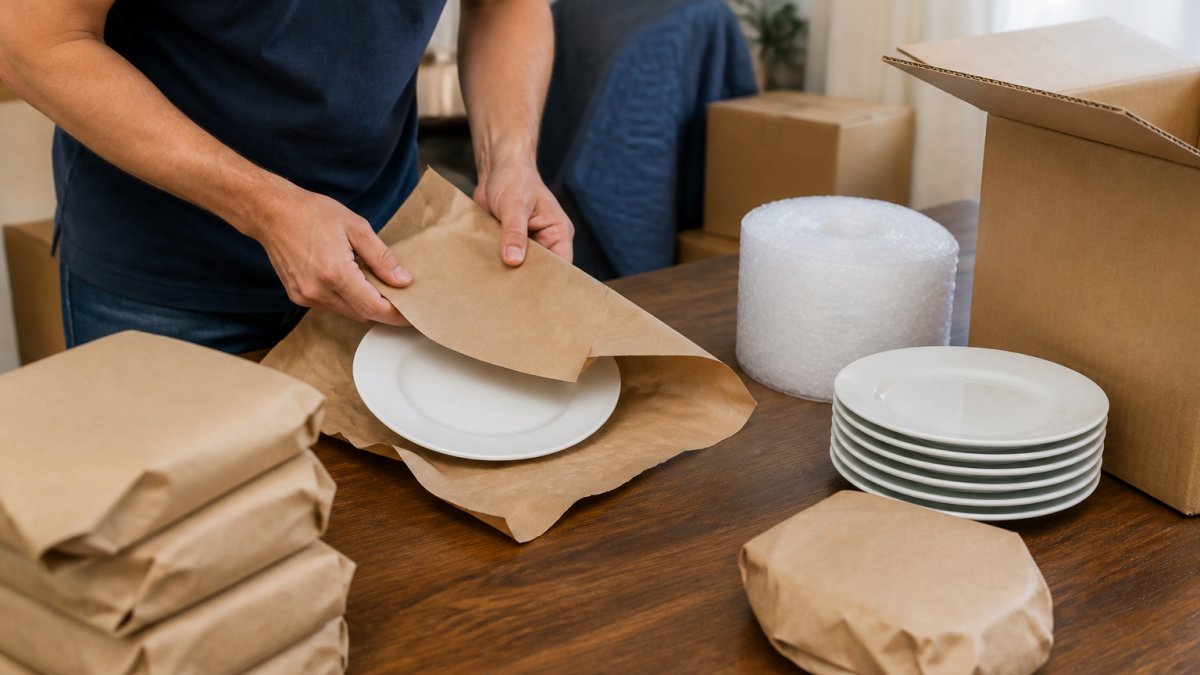
Never stack dishes flat and wrapped together. The weight of stacked dishes crushes the ones underneath. Vertical stacking prevents this pressure and is the standard method for professional movers.
How to Pack Glassware for Moving Safely
Glassware is more fragile than dishes; hollow pieces break easily at the rim and base. Packing glassware for moving requires a different approach:
- Wrap the bowl first, Start at the widest part.
- Wrap the stem separately, Stems snap easily in transit.
- Use multiple layers, At least two layers of packing paper.
- Pack upright in boxes, Not on their side, to distribute weight evenly.
- Use dividers for tall glasses, Compartments prevent tipping.
- Fill empty space, Foam peanuts or crumpled paper around glasses.
For wine glasses or champagne flutes, wrap the bowl and stem separately, then wrap the entire glass again.
Never pack glassware loose; every piece should be individually wrapped and secured.
Pack glassware in smaller boxes. A box full of glassware is heavy and difficult to move safely. Smaller boxes are easier to handle and reduce the risk of the box breaking open.
Techniques for Wrapping and Protecting Fragile Items
Wrapping technique is everything when you pack fragile items. Poor wrapping breaks items even when boxes are handled carefully, while good wrapping absorbs shock and stops movement.
The core wrapping method
The basic method works for most fragile items:
- Start with packing paper. Lay the item on a sheet.
- Fold corners over the item. One corner, then the opposite, creating an X.
- Roll the item until completely covered.
- Secure with tape, a small piece only.
- Add bubble wrap over the paper layer for valuable or delicate items.
- Match bubble size to the item. Larger bubbles suit most items; smaller bubbles suit tiny, delicate pieces.
Crumple packing paper into loose balls to fill voids; crumpled paper holds its shape and cushions better than flat sheets.
Item-specific techniques
Artwork, mirrors, and picture frames. Tape an X of painter’s tape across the glass to stop shards scattering and the surface flexing.
Electronics. Photograph the back panel and cable connections before unplugging.
Lamps and lampshades. Wrap the shade separately from the base.
Framed photos and documents. Place between two sheets of rigid cardboard and tape the edges; flat items bend under the weight of other boxes.
Double-boxing for high-value items
Double-box anything expensive or irreplaceable: place the wrapped item in a smaller box, then pack that inside a larger box with at least 5 cm of cushioning on all sides. The inner box absorbs the first impact; the outer adds a second layer.
Double-boxing is ideal for antique items, collectibles, electronics, framed art, and anything you can’t replace. The extra cost of materials is worth the peace of mind.
Sustainable alternatives that still protect
You don’t have to choose between protecting items and reducing waste. Several eco-friendly options perform well:
- Crumpled newspaper or packing paper for void fill and wrapping, using unprinted paper where ink transfer is a concern.
- Old towels, sheets, and clothing as padding around wrapped items; they cushion and travel with you.
- Reusable moving blankets and padded furniture covers for large items, rented or borrowed.
After the move, offer clean boxes, dividers, and packing paper to neighbors, buy-nothing groups, or local moving supply stores that accept returns.
GET YOUR FREE MOVING QUOTE Today →
Label the outside of every box with its contents and a box number as you seal it. A five-second label now saves twenty minutes of searching later, and it’s the single most common piece of advice professional movers give.
Packing Fragile Items Checklist and Box Assembly
Use this checklist before you start packing:
- Gather all packing materials (paper, bubble wrap, tape, boxes, dividers)
- Set up a clean, well-lit workspace
- Create an inventory list of fragile items
When assembling boxes:
- Place a 5 cm layer of foam peanuts or crumpled paper at the bottom.
- Arrange wrapped items inside, leaving space between each.
- Fill gaps with more foam peanuts.
- Leave 2.5-5 cm of space at the top.
- Add a final layer of cushioning.
- Seal with heavy-duty tape on all seams.
Don’t overpack: items need room to cushion without being crushed, and an overfull box risks breaking open.
| Step | Action | Why It Matters |
|---|---|---|
| 1 | Wrap individually | Prevents items from touching and breaking |
| 2 | Use dividers | Keeps items separated and protected |
| 3 | Pack vertically | Reduces pressure on bottom items |
| 4 | Fill gaps | Stops items from shifting during transport |
| 5 | Seal securely | Prevents box from opening in the truck |
| 6 | Label clearly | Alerts movers to handle with care |
Labeling, Insurance, and Unpacking Your Fragile Boxes
Labeling, coverage, and unpacking are the stages most people rush, and exactly where money gets lost when something breaks.
Labeling that actually communicates
Label boxes on at least three sides—top, front, and back—so the warning is visible however the box is stacked. Use bright “FRAGILE” stickers or large block letters, and add “THIS SIDE UP” for items that must stay upright, such as lamps, artwork, and anything with liquid inside.
Go beyond the word “FRAGILE,” which tells a mover nothing about what’s inside or how heavy it is. Add:
- A box number (Box 1, Box 2, and so on) that matches your master inventory list.
- A short contents note (“dinner plates,” “wine glasses,” “framed art”).
- A room destination (“Kitchen,” “Dining room”) so boxes land in the right place on arrival.
Color-coding by room with different tape colors is a fast way to sort boxes at the destination without reading every label.
Documenting fragile items for a claim
This step determines whether a broken item gets reimbursed.
Before sealing a box, photograph each high-value fragile item on a plain background, then wrapped and inside the box. For antiques, artwork, or collectibles, keep appraisals, receipts, or certificates of authenticity in your moving file, not the box.
People often discover a broken item after the box is at the curb, with no photos or proof of condition, making a claim very hard to support. Build the evidence before the move.
Understanding your coverage options
Moving companies are not automatically liable for the full value of your goods.
Ask your mover, in writing, three questions:
- What is the base liability coverage included in your quote, and how is it calculated?
- What additional valuation or replacement-value coverage can you purchase, and what does it exclude?
- What is the deadline for filing a damage claim, and what documentation is required?
For very high-value items, antiques, fine art, jewelry, musical instruments, specialty electronics, a standalone policy or a rider on your home or tenant insurance is often better.
Keep every receipt, appraisal, and photo in one folder, physical or digital, that travels with you, not in the moving truck.
Unpacking fragile items without causing damage
Unpacking is where many breaks happen, because people cut into boxes carelessly or pull items out by the wrong end.
Follow this order:
- Unpack in a safe area away from foot traffic, pets, and hard flooring edges; a padded surface or blanket reduces damage if something slips.
- Cut tape, don’t stab. Use a shallow blade or packing tape cutter, cutting along the seam.
- Remove the top layer of cushioning first. Don’t tip the box upside down to dump contents.
- Lift each item by its base or body, never by a handle, rim, stem, or cord; these are the weakest points.
- Unwrap over a soft surface so a dropped item lands softly.
- Inspect each item for chips, cracks, and hairline fractures before discarding its wrapping.
- Keep all packing materials until every box is unpacked and damage-free; they’re evidence if you file a claim.
For items that did break, photograph the damage in place, keep the broken pieces and packaging, and contact your mover or insurer immediately. Most companies have a short claim window, often measured in days from delivery, so don’t wait until you’re fully settled in.
Don’t discard packing materials until you’ve unpacked everything and confirmed no damage. Packing materials are evidence if you need to file a claim for broken items, and once they’re gone, a claim becomes much harder to support.
Label on three sides, photograph high-value items before sealing, confirm your coverage in writing, and unpack slowly over a soft surface. These four habits prevent most post-move disputes and most unpacking breaks.
Frequently Asked Questions
What’s the best way to pack fragile items to prevent breakage during a move?
Start by using sturdy, corrugated cardboard boxes designed for moving. Wrap each item individually with packing paper or bubble wrap, then add cushioning materials like foam peanuts or crumpled paper at the bottom of the box. Layer items carefully, placing heavier pieces on the bottom and lighter items on top. Fill all void spaces with padding to prevent shifting. Double-boxing provides extra protection for especially delicate items like wine glasses or fine china. Label all fragile boxes clearly and ensure they’re loaded last onto the moving truck so they’re unloaded first.
Is bubble wrap or packing paper better for protecting glassware?
Both work well, but they serve different purposes. Bubble wrap provides excellent shock absorption and is ideal for individual glassware pieces and delicate items. Packing paper is better for initial wrapping and filling gaps because it’s less bulky and easier to layer. The most effective approach combines both: wrap items first in packing paper for a secure grip, then add a layer of bubble wrap for cushioning. For stemware and wine glasses, wrap the stem separately and protect the bowl with extra bubble wrap. This dual-layer method offers maximum protection during transport.
How do I pack dishes for moving without them breaking?
Pack dishes vertically rather than stacking them flat, as this distributes weight more evenly and reduces pressure on individual pieces. Wrap each dish individually in packing paper, using at least 2-3 layers. Place wrapped dishes upright in the box like records, separated by additional packing paper or cardboard dividers. Fill the bottom of the box with 5 centimetres of cushioning material and add padding between each dish. Never leave empty spaces; fill all voids with foam peanuts or crumpled paper. Use dish cells or cardboard dividers for added stability. Label the box clearly as fragile and avoid stacking other boxes on top.
What packing materials are essential for fragile items?
Essential materials include sturdy corrugated moving boxes, packing paper, bubble wrap, packing tape, foam peanuts, and fragile labels. For extra protection, use dish cells, cardboard dividers, and kraft paper. Crumpled newspaper or recycled paper can serve as void fill in a pinch. Consider eco-friendly alternatives like biodegradable packing peanuts, recycled cardboard, and kraft paper. For high-value items, double-boxing with an extra layer of cushioning between boxes provides insurance-grade protection. Ensure you have enough tape to seal boxes securely, and use permanent markers for clear labeling. Having a checklist prevents last-minute shortages.