
Table of Contents
- Moving Insurance for High Value Items: What Actually Gets Covered
- The $0.60 per Pound Baseline Most Movers Start From
- What Counts as a High-Value Item
- Full Value Protection vs Released Value: Which One Pays Out
- Building a High-Value Inventory List That Survives a Claim
- Appraisal Requirements for Moving Insurance on Art, Antiques and Pianos
- Mover Coverage vs Third-Party Transit Insurance
- Packing Protocols and Transit Nuances for High-Value Moves
- Filing a Claim: From Bill of Lading to Settlement
- Conclusion
- Frequently Asked Questions
Last Updated: October 4, 2026
Moving Insurance for High Value Items: What Actually Gets Covered
Most moving contracts start from a baseline that surprises people: carrier liability of roughly $0.60 per pound, per item. That standard household goods tariff default is why a crushed 40-kilogram antique cabinet can generate a settlement smaller than the cost of the wood it was built from.
Moving insurance for high value items combines carrier liability, a declared valuation option, and, where needed, a separate third-party transit policy covering the gap between what a mover is legally responsible for and what your possessions are worth.
The $0.60 per Pound Baseline Most Movers Start From
Released value protection is the default coverage in most moving contracts, paying by weight rather than value. A damaged item settles at a set amount per pound, so a heavy but inexpensive item can recover more than a light, irreplaceable one.
A 2-kilogram porcelain figurine and a 2-kilogram cast-iron pan settle at the same rate, though their replacement costs are nowhere near each other. For ordinary household goods, released value protection is often adequate. For anything valuable, it is not.
Signing a bill of lading without reading the valuation clause is a common mistake. The default is released value protection, and once the contract is signed, that is the coverage you have unless you have requested and paid for something better in writing.
What Counts as a High-Value Item
A high-value item is any possession whose replacement cost significantly exceeds what standard carrier liability would pay if it were lost or damaged. There is no universal dollar threshold, but the categories are consistent.
- Fine art, prints, and framed originals
- Antiques and pieces with documented provenance
- Pianos, especially grand and baby grand models
The test is simple: if the item’s market value is more than the weight-based settlement would return, it needs to be declared, appraised, or insured separately.
Full Value Protection vs Released Value: Which One Pays Out
Full value protection settles a damaged or lost item at replacement cost, repair cost, or a cash settlement rather than by weight. It costs more and usually carries a deductible, but reflects what your possessions are actually worth.
| Feature | Released Value Protection | Full Value Protection |
|---|---|---|
| Settlement basis | Weight of item | Replacement or repair cost |
| Typical cost | Included in base rate | Additional premium or deductible |
| Best for | Ordinary household goods | High-value inventory |
| Documentation needed | Minimal | Itemized list, sometimes appraisal |
| Coverage exclusions | High-value categories often excluded | Fewer, but deductible applies |
Neither option covers everything. Both typically exclude owner-packed items and consequential losses like a missed business deadline from a delayed delivery.
Released value protection is a floor, not a plan. If you own anything whose replacement cost exceeds a few hundred dollars, full value protection is the option worth pricing before you sign.
Building a High-Value Inventory List That Survives a Claim
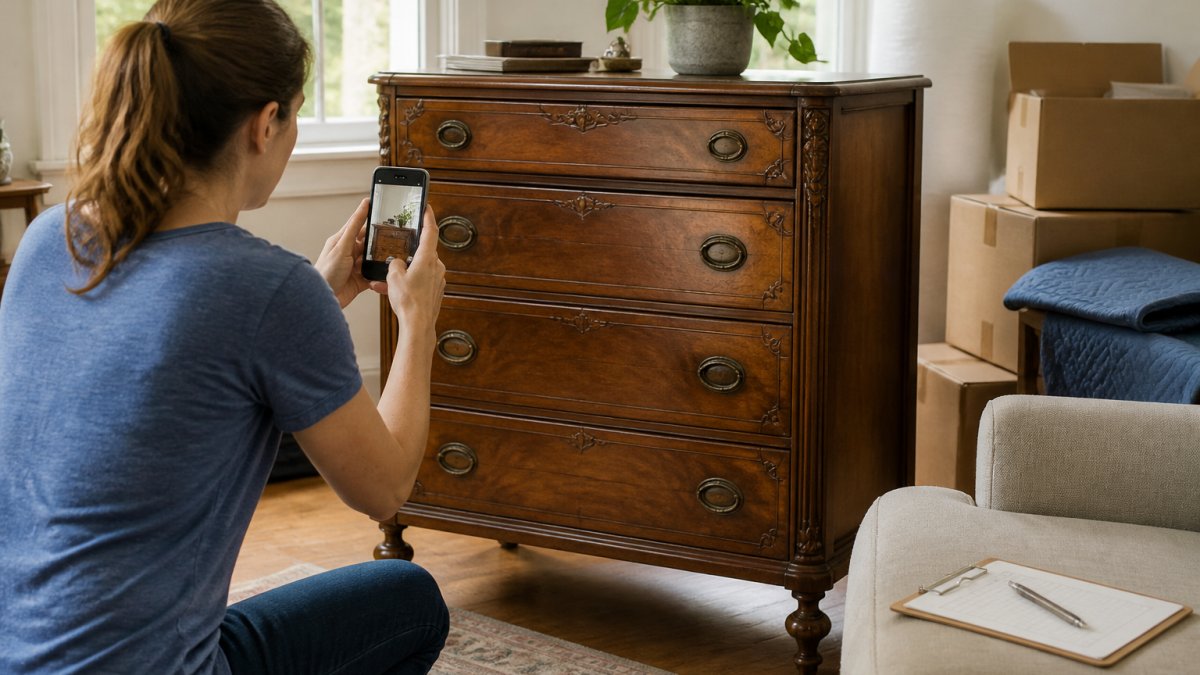
A high-value inventory list is an itemized record of your valuables, photographs, descriptions, and proof of ownership, prepared before moving day. It turns a claim from a negotiation into a straightforward settlement.
The inventory is evidence, not just a list.
Proof of Value: The Part That Decides the Payout
Listing an item is easy; proving its worth is where claims succeed or fail. A claim is often reduced not because the item was not damaged, but because the owner could not demonstrate its value to the adjuster.
Value is usually established through one or more of the following, in roughly descending order of strength:
- A written appraisal from a qualified appraiser, dated within a reasonable window before the move. This is the strongest single document for art, antiques, jewelry, and instruments.
- A purchase receipt or invoice showing the original price, date, and seller. Strong for recently bought items and electronics.
- A replacement-cost quote from a retailer or specialist for items still in production.
Where none exist, the item’s value becomes a matter of argument, and arguments settle low. If you own something valuable with no paper trail, create one before the move.
What to Photograph and Record Before Moving Day
- Photograph each high-value item from at least four angles, in good light
- Capture any existing scratches, chips, or wear in close-up
- Record the make, model, serial number, and dimensions
Matching Documents to Items
An adjuster should move from an inventory line to its supporting document without guessing. Give each item a number and use it on the photograph file name, the receipt or appraisal, and the inventory line, so the numbered set travels together.
Store the inventory digitally and keep a copy off-site. A list that travels in the same truck as the items it describes is not much use.
A receipt proves what you paid. An appraisal proves what the item is worth now. For anything whose value has changed since purchase, art, antiques, collectibles, jewelry, the appraisal is the document that matters, and it needs to predate the loss.
Condition Reports and Pre-Existing Damage
Insurers assess a claim against the item’s pre-move condition. Undocumented scratches, chips, or repairs can be attributed to the move and reduce the claim. A dated condition note backed by close-up photographs confirms what was already there and isolates what the move caused.
For high-value pieces, a short written condition report, date, item number, existing wear, signature, takes minutes and belongs with the appraisal.
Appraisal Requirements for Moving Insurance on Art, Antiques and Pianos
Appraisal requirements for moving insurance vary by carrier and item category.
A piano appraisal documents maker, serial number, age, and current market value. Art appraisals cover attribution, medium, dimensions, and provenance.
Two practical points:
GET YOUR FREE MOVING QUOTE Today →
- Get the appraisal before the move, not after a loss. Retroactive appraisals are difficult to support.
- Keep the appraisal with the inventory. The two documents work together.
If you are unsure whether an item needs an appraisal, ask before the contract is signed. Adding coverage later is harder than setting it up correctly at the start.
Mover Coverage vs Third-Party Transit Insurance
Mover-provided coverage and third-party transit insurance are different products, and the difference matters when a claim is large.
Third-party transit insurance is a separate policy, often bought through a broker, covering your goods in transit independently of the mover’s liability.
Which you need depends on what you are moving. For a standard household move, carrier liability with full value protection is usually sufficient.
Packing Protocols and Transit Nuances for High-Value Moves
Damage prevention starts with packing, and high-value items need protocols beyond wrapping in paper.
- Pianos: Use a piano board, pad the corners, and secure the lid. Never move a piano on its casters over a threshold.
- Art and mirrors: Face the surface against a rigid board, tape the glass in an X pattern, and use corner protectors.
- Antiques: Pad joints and remove any part that can be detached, such as a marble top or a mirror panel.
The packing method also affects the claim. Owner-packed items are commonly excluded from coverage, which is one reason professional packing is worth the cost for anything valuable.
Long-Distance and Cross-Border Moves
Long-distance moves add transit time, handling points, and damage risk. Cross-border moves add customs documentation and sometimes separate insurance requirements on each side. If your move crosses a border, confirm coverage applies for the full journey, not just the domestic leg.
For long-distance and cross-border moves, ask for the transit time in writing and confirm the coverage period covers the full window. A policy that expires mid-journey leaves the highest-risk leg unprotected.
Filing a Claim: From Bill of Lading to Settlement
The bill of lading is the contract of carriage and governs your claim, recording the items, valuation option, and move terms. For high-value items, the claim carries a higher evidentiary bar, and the documents you assembled before the move do most of the work.
The High-Value Claims Sequence
- Inspect at delivery, before signing. Note any damage on the delivery receipt in writing. A signature without a notation is the most common way a claim is weakened.
- Photograph the damage in place. Capture the item, the packaging, and the surrounding area before anything is moved or discarded.
- Keep the damaged item and its packaging. Do not repair, dispose of, or ship the item until the claim is resolved. Insurers may want to inspect it.
- Notify the mover in writing within the timeframe stated in the bill of lading. For high-value items, notify promptly rather than at the deadline, appraisals and inspections take time.
- File the claim in writing with the inventory, photographs, receipts, appraisals, and the condition report attached, each cross-referenced by item number.
- Cooperate with the assessment. Expect a damage evaluation, and possibly a request for an independent appraisal or repair quote.
- Negotiate the settlement against the valuation option. With released value protection, expect a weight-based payout. With full value protection, expect repair, replacement, or a cash settlement, less any deductible.
- Keep every piece of correspondence. Dates, names, and written confirmations matter if the claim is disputed.
Why High-Value Claims Take Longer
A scuffed table can often be settled from a photograph and a replacement quote. A high-value claim usually cannot, because the amount at stake justifies verification. Common reasons a high-value claim slows or is reduced:
- The item’s value is disputed because no appraisal or receipt exists.
- Pre-existing damage was not documented, so causation is unclear.
- The item was packed by the owner, which many contracts exclude from coverage.
Each is preventable, tracing back to documentation or handling decisions made before the move.
Settlement Mechanics for High-Value Items
Settlement follows the valuation option in the contract, but the path to a number differs by item type:
- Repairable items, settlement is typically the repair cost, subject to the deductible.
- Items that cannot be repaired, settlement is replacement cost or a cash figure, supported by an appraisal or comparable sales.
- Collections and sets, value is usually assessed as a whole; breaking a set can reduce the settlement, so document the set as a unit.
If a high-value item is damaged, get an independent repair or replacement quote in writing before accepting a settlement. A single quote from the mover’s preferred vendor is not the same as a market figure, and the difference can be substantial on art, instruments, and antiques.
When to Bring in a Third Party
If the mover’s liability under the selected valuation option will not cover the item’s value, the claim may need to run through a third-party transit policy instead of, or alongside, the carrier. Notify the insurer as well as the mover, and confirm which policy is primary. Filing with only one can leave the other out of time.
The claim is won or lost before moving day. An item with a dated appraisal, a numbered photograph, a condition report, and a receipt settles quickly. The same item without them becomes a negotiation the owner usually loses.
Conclusion
The gap between what a move is worth and what standard coverage pays is where most people get caught out. Closing it takes three things: the right valuation option, a documented inventory, and packing that protects the items before a claim is ever needed.
Our all-inclusive hourly rate covers stairs, truck, and kilometers with no hidden fees, our team packs and moves high-value items with the care they require, and we provide custom moving estimates based on your actual inventory.
Frequently Asked Questions
Does standard moving company liability cover high-value items?
Standard carrier liability in Canada typically pays a limited amount per pound, often around $0.60 per pound per item, regardless of what the item is worth. A 5 kg antique lamp would generate only a few dollars under that formula. High-value items like art, pianos, and jewellery need either full value protection from the mover or a separate third-party transit policy to be meaningfully covered.
What is the difference between released value protection and full value protection?
Released value protection is usually included at no extra cost and caps payout at a set amount per pound. Full value protection costs more but covers repair, replacement, or a cash settlement based on the item’s replacement cost. For a household with electronics, instruments, or antiques, full value protection or a third-party policy is the only option that reflects real market value.
How do I document high-value items for insurance purposes before a move?
Build a high-value inventory list with a photo of each item, its purchase receipt or appraisal, serial numbers where applicable, and a short description of condition. Store the file in the cloud and keep a printed copy with you, not in the moving truck. This documentation is what a claims adjuster will ask for first if something is damaged or lost in transit.
Should I purchase third-party transit insurance for expensive art or antiques?
If the mover’s full value protection excludes fine art, or if the item’s appraised value exceeds the mover’s per-item cap, a third-party transit policy is worth the premium. These policies often require a professional appraisal and specific packing standards. Confirm in writing that the policy covers door-to-door transit, not just storage or loading.
Does my existing home insurance policy cover items while they are in transit?
Many home contents policies in Canada reduce or exclude coverage once belongings leave the home during a move. Some extend limited transit coverage, but the limits are often well below the value of high-value items. Call your insurer before moving day to confirm what applies, and ask whether a rider or floater is needed for specific pieces.
What steps should I take if a high-value item is damaged during transit?
Note the damage on the bill of lading before signing for delivery, photograph the item and packaging immediately, and notify the mover in writing within the timeframe stated in your moving contract. Keep the damaged item and packing materials until the claim is settled. Then submit your inventory list, appraisal, and photos to support the damage assessment.