
Last Updated: October 31, 2026
Quick Summary
Hiring local movers usually costs less overall than a DIY move once you add truck rental, fuel, supplies, equipment, meals, time off work, and a damage cushion. DIY only wins clearly for small apartments, short distances, and households with free helpers and flexible schedules.
- A professional quote can bundle the truck, fuel, kilometers, equipment, and crew into one hourly rate.
- Run a break-even test: total your DIY cash, price your hours, then compare to an all-inclusive quote.
- A local move a crew finishes in hours typically eats an entire weekend when you do it yourself.
- Junk removal is a separate errand in a DIY move, not a free add-on.
- Confirm building requirements, permits, and elevator reservations at least a week before moving day.
Table of Contents
- Hiring Local Movers vs DIY Move: The Core Trade-Off
- Cost of Hiring Movers vs Moving Yourself: A Line-by-Line Comparison
- How Long Does It Take to Move House? DIY vs Professional Timelines
- Your DIY Move Checklist: What You Take On Yourself
- Risk, Liability, and Insurance: What Happens When Something Breaks
- Local Logistics: Stairs, Parking, Elevators, and Access Limits
- Questions to Ask Local Movers Before You Book
- Request a Free Moving Quote and Compare It to Your DIY Budget
- Frequently Asked Questions
Hiring Local Movers vs DIY Move: The Core Trade-Off
The hiring local movers vs DIY move decision comes down to one honest question: what is your time and your back actually worth?
Most people underestimate the DIY total by a wide margin, and almost everyone underestimates how long a move takes.
Below, we break down both paths line by line, show what a realistic DIY budget includes, and give you a checklist and vetting questions so you can compare quotes without getting burned.
Cost of Hiring Movers vs Moving Yourself: A Line-by-Line Comparison
A DIY move often costs less in cash but more in hours, risk, and hidden extras. Professional movers often bundle the truck, equipment, labor, and liability into one rate. The gap narrows fast once you count what DIY quietly consumes.
What a DIY Move Actually Costs
A DIY move is never just the truck. Build a realistic budget from these line items before you decide:
- Truck or trailer rental: base rate plus per-kilometer mileage, fuel, and a cleaning or late-return charge. A short local move with multiple trips can cost more than the quoted day rate suggests.
- Fuel: a loaded moving truck burns noticeably more than your car; budget a full tank plus a refill on return.
- Moving supplies: boxes, tape, bubble wrap, mattress bags, and furniture blankets. A two-bedroom home commonly needs dozens of boxes and several rolls of tape, and specialty boxes for TVs and mirrors add cost.
Add those up and the “cheap” DIY move is rarely as cheap as it looked. Total your DIY cash outlay, add the value of your unpaid hours, and add a damage cushion.
What Professional Movers Include in Their Rate
A professional quote can bundle the truck, fuel, kilometers, equipment, and crew into one hourly rate. If you want to understand how hourly pricing is built and what belongs inside it, our guide on whether an hourly moving rate is worth it explains the mechanics.
The real difference between a cheap quote and a fair one is what sits outside the rate. Ask directly whether stairs, long carries, packing materials, and fuel are included or billed on top.
| Cost Line | DIY Move | Professional Movers |
|---|---|---|
| Truck and fuel | You rent and fuel it | Bundled in the rate |
| Equipment | You buy or rent | Provided by the crew |
| Labor | Friends, favors, risk | Trained, insured movers |
| Supplies | You source and pay | Available as an add-on |
| Time off work | Often 1-2 days | A few hours |
| Damage liability | On you | Covered per the agreement |
The Break-Even Method: When DIY Stops Paying
Run a simple break-even test. Estimate your DIY cash total (truck, fuel, supplies, equipment, meals, and a damage cushion). Then multiply the hours you expect to spend packing, loading, driving, unloading, and returning the truck by an hourly figure you would honestly pay to get those hours back.
DIY wins clearly for small apartments, short distances, and households with free helpers and flexible schedules. The math flips toward movers as home size grows, as stairs and carry distance increase, and as the value of your weekend rises.
Run the break-even test before you book anything. A quote you can compare against a real DIY total is worth more than three quotes you cannot.
Hybrid Options That Split the Difference
You are not limited to all-DIY or all-movers. Hybrid choices often win on both cost and risk:
- Rent the truck, hire loading help: you drive and control the schedule, but a crew loads and unloads the heavy items, removing injury risk and staircase guesswork while keeping rental costs.
- Hire movers for the heaviest items only: pianos, safes, appliances, and large furniture are where DIY damage and injuries concentrate. Paying for those pieces alone can be cheaper than a full-service move.
- Portable containers: you pack and load at your pace, the container is transported for you, and you unload at the destination. This suits moves with flexible timelines.
Each hybrid trades some control for savings. The right split depends on which phase you can do safely and which is eating your time.
How Long Does It Take to Move House? DIY vs Professional Timelines
A local move that takes a professional crew a few hours typically eats an entire weekend when you do it yourself.
DIY timelines stretch because everything is a first attempt. You rent the truck in the morning, discover the sofa will not clear the door, drive back for a dolly, and lose two hours.
Professional timelines compress because the work is parallel and practiced. Packing, loading, transport, and unloading happen in a planned sequence.
Your DIY Move Checklist: What You Take On Yourself
A DIY move checklist is the list of jobs you own end to end when you skip the crew. If you read it and feel fine, DIY is probably right for you. If it makes your stomach drop, that is your answer.
GET YOUR FREE MOVING QUOTE Today →
- Book the truck or trailer and confirm mileage terms
- Recruit and confirm at least two strong helpers for the day
- Buy boxes, tape, wrap, and furniture blankets
That last item trips people up. Junk removal is a separate errand in a DIY move, not a free add-on.
Risk, Liability, and Insurance: What Happens When Something Breaks
When something breaks in a DIY move, you absorb the loss. When you hire movers, the agreement you sign defines what is covered and how a claim is handled. That distinction matters most for heavy furniture, pianos, antiques, and anything with sentimental value.
Before you book anyone, ask what liability coverage applies, what the deductible is, and how a damage claim is filed. If you are moving high-value pieces, our guide on moving insurance for high value items walks through the coverage options and what to confirm before the truck arrives.
Local Logistics: Stairs, Parking, Elevators, and Access Limits
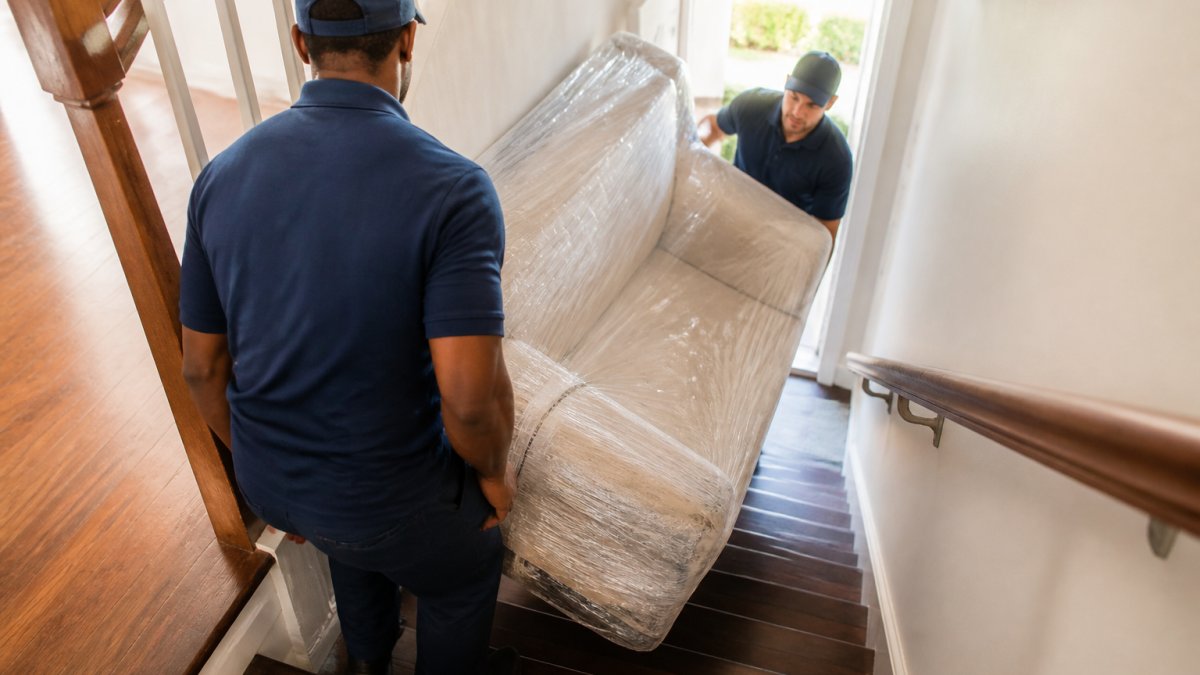
Local access constraints decide more moves than people expect. A third-floor walk-up, a narrow stairwell, a building with one service elevator, or a street with no loading zone can add hours to a DIY move and change a quote entirely.
How Each Constraint Changes the Math
- Stairs: count the flights at both ends and confirm whether the quote charges for them. Stairs slow every carry and, in a DIY move, multiply trips and injury risk. A crew sequences carries to minimize trips; a first-timer usually does not.
- Parking: find out if a permit or reserved spot is needed for the truck. In dense areas, a loading zone permit or temporary no-parking reservation may be required, and the process takes lead time. A DIY mover who discovers this on moving day loses hours circling the block.
- Elevators: book the service elevator and confirm padding rules with the building. Many buildings require a reservation and proof of insurance from the moving company.
A quote that ignores stairs and carry distance can be incomplete, and extra charges may appear on the final bill. The same applies in reverse to DIY: a move you budgeted for a morning can stretch into a full day once access constraints are counted.
Moving-Day Contingency Planning
Access constraints are predictable; breakdowns are not. A practical plan covers the common failure points:
- Truck delays or breakdowns: have the rental company’s roadside number and a backup plan for a second vehicle. A DIY move has no dispatcher to send a replacement.
- Helper cancellations: confirm helpers the day before and have a fallback. A crew that does not show is a professional problem; a friend who does not show is yours.
- Weather: rain and snow slow carries, damage boxes, and make stairs slippery. Have tarps and a covered staging area, and build slack into the schedule.
Confirm building requirements, permits, and elevator reservations at least a week before moving day. These are the constraints most likely to turn a planned half-day into a full day, and they are the ones a professional crew plans around by default.
What to Confirm Before You Choose
Call the buildings at both ends and ask about loading zones, elevator reservations, insurance requirements, and any move-in or move-out fees. Compare that list against what your DIY plan can realistically handle and what a mover’s quote already includes. If access constraints are simple, DIY stays viable. If they are complex, the cost of solving them yourself, in time and risk, is often the strongest argument for hiring a crew.
Questions to Ask Local Movers Before You Book
Ask these questions before you sign anything, and ask them the same way of every company you call:
- Is the rate all-inclusive, and what exactly does it cover?
- Are stairs, long carries, and fuel included or billed extra?
- What liability coverage applies, and how do I file a claim?
- Are your movers employees or subcontractors?
- Can you confirm the booking in writing, and what is the cancellation policy?
- Do you handle packing, storage, and junk removal, or are those separate?
- How do you handle a piano or other high-value item?
If you want a ready-made version of this list to bring to every call, our post on the essential questions to ask your movers before hiring lays them out in full.
Request a Free Moving Quote and Compare It to Your DIY Budget
The only fair comparison is a real quote against a real DIY budget. Add up your truck rental, supplies, equipment, lost time, and a damage cushion, then hold that number next to an all-inclusive quote. That is the moment the decision usually makes itself.
At Mansa Movers, we build custom estimates around your actual move: packing, storage, junk removal, and long-distance relocations included where you need them. When you are ready, compare moving estimates side by side against your DIY total, and if you want the local pricing detail first, our local residential moving costs guide breaks it down.
Frequently Asked Questions
Is it cheaper to hire local movers or move yourself?
A DIY move often looks cheaper at first because you only see the truck rental. Once you add fuel, mileage, packing supplies, equipment, and the value of your own time, the gap narrows, especially for larger homes or moves with stairs and heavy furniture. Professional local movers quote an all-inclusive hourly rate that bundles the truck, equipment, and crew, so you can compare the two numbers directly. Get a written quote and set it beside your itemized DIY budget before deciding.
How long does it take to move house with a DIY move compared with hiring movers?
A DIY move typically stretches across several days: packing over a week or more, loading on moving day, driving, then unloading and reassembling. A professional crew handles the same household goods in a single day for most local moves because they load faster and know how to sequence heavy furniture. If your schedule is tight or you cannot take extra days off work, the time difference alone often justifies the cost of hiring local movers.
What are red flags for moving companies?
Watch for quotes given over the phone without an in-person or video survey, demands for a large cash deposit upfront, no written contract, and vague answers about insurance or additional fees for stairs and equipment. A company that will not put its all-inclusive rate in writing is a risk. Ask directly what the hourly rate covers and whether fuel, mileage, and stair carries are included, then get the answer documented before you sign.
Is hiring movers worth it for a small move?
For a studio or one-bedroom with few heavy items and flexible timing, a DIY move with friends and a rental truck can work well. Hiring local movers makes more sense when you have heavy furniture, a piano, tight stairwells, a fixed move date, or no available help. Many companies offer a two-mover minimum, so a small move can still be cost-effective if it saves you a day of loading and a damaged doorway.
What should I ask a moving company before booking?
Ask what the hourly rate includes: truck, fuel, mileage, stairs, equipment, and packing materials. Confirm whether the crew is employees or subcontractors, what insurance covers and the claims process, and how they handle cancellation or rescheduling. Also ask for the estimated crew size and time window, and whether junk removal or storage is available if you need it. Get every answer in the written quote so nothing becomes a surprise charge on moving day.
The real question is not which option is cheaper on paper, it is which one you can afford to get wrong. A DIY move that runs long, damages a piano, or costs you two days of work rarely ends up saving money. Get a free moving quote from Mansa Movers and compare it to your DIY budget with the full picture in front of you, including packing, storage, junk removal, and transparent hourly pricing with no surprise fees for stairs or equipment.
