
Quick Summary
A moving day timeline is a simple schedule that lists every task from the first alarm to the last box unpacked, showing who does what and when. Writing one hour by hour keeps your move on track and reduces avoidable waiting and mistakes.
- Confirm the arrival window, lead mover’s name, and parking or elevator access in writing before moving day.
- Stage an essentials box with chargers, medications, toiletries, keys, and documents, and keep it with you rather than on the truck.
- Photograph furniture, appliances, and valuables before loading so you can prove their condition if a claim is needed.
- Count boxes against your inventory at delivery and report any damage to the moving company the same day.
Table of Contents
- Why a Moving Day Timeline Keeps Your Move on Track
- Step 1 to 3: Before the Movers or Truck Arrive
- Step 4 to 6: Loading, Walkthroughs and Documentation
- Building Your Moving Day Essentials Box
- Step 7 to 10: Transit, Arrival and Settling In
- Moving Day Timeline Hour by Hour, Plus a Printable Checklist
- Booking Mansa Movers for Your Next Step
- Frequently Asked Questions
Why a Moving Day Timeline Keeps Your Move on Track
Last Updated: November 8, 2026
Moving day goes fast, and most of the stress comes from not knowing what happens next. A written moving day timeline turns that chaos into a clear order of tasks. Families who plan the day hour by hour tend to spend less time waiting and avoid many avoidable mistakes.
A moving day timeline is a simple schedule that lists every task from the first alarm to the last box unpacked. It shows who does what, when it happens, and what to check before moving on. Think of it as a plan you can tick off, not a wish list.
Here is what this guide covers:
- Ten clear steps, from the hour before the truck arrives to your first night in the new home
- A sample hour-by-hour schedule you can adjust
- An essentials box checklist for the things you need on day one
- Tips for working with your movers, including confirming arrival windows
Most of these steps take little effort. The value comes from doing them in the right order.
Step 1 to 3: Before the Movers or Truck Arrive
The first three steps happen before anything leaves the home, and they set the tone for everything that follows. Treat the two hours before your arrival window as protected time: no errands, no last-minute packing, no surprises.
Step 1: Walk through the home and confirm the plan (do this the night before and again on the morning). Check that each room is emptied down to closets, cupboards, the garage, the balcony, and any storage locker. Confirm that pets, children, or a trusted friend are settled somewhere safe and out of the loading path.
Step 2: Confirm the crew and the truck. Call your moving company at the start of the morning to confirm the arrival window, crew size, and truck type, and ask for the lead mover’s name. If you hired a company, ask about its crew arrangements and confirm proof of insurance is on file with your building.
Step 3: Set up your work area. Choose one spot near the door for the essentials box, keys, paperwork, phone charger, and a printed copy of the moving quote and inventory. Keep a pen and a roll of tape there.
Confirm arrival windows and access details
Late starts often trace back to access issues. Before moving day, confirm the arrival window in writing, reserve the parking spot or loading zone, and book the elevator if the building requires it. Building access rules vary, so check with your property manager in advance about elevator bookings and parking or loading-dock reservations, and keep any confirmation numbers with your paperwork. A short call the day before saves a lot of waiting time.
DIY versus professional: what changes before arrival
If you hired movers, your job before arrival is access, paperwork, and supervision. If you are moving yourself, your job also includes equipment: confirm the truck size matches your inventory, check that dollies, straps, and moving blankets are loaded, and decide who is driving and who is directing. For a DIY move, build in extra time before the first load for truck inspection and a safety walk-through of the path from door to curb.
Step 4 to 6: Loading, Walkthroughs and Documentation
This is the busiest part of the day. Stay close enough to answer questions, but let the crew do the heavy lifting.
Step 4: Do a quick walkthrough with the lead mover. Point out fragile items, valuable pieces, and anything that should not go on the truck. Label those items clearly. For step-by-step help packing delicate pieces before loading, see how to pack fragile items for moving.
Step 5: Photograph the condition of big items. Take quick photos of furniture, appliances, and anything valuable before it is loaded. If a claim is ever needed, these pictures help prove the item’s condition.
Step 6: Check the truck before it leaves. Once loading is complete, walk through the home one final time. Check closets, under beds, the garage, and the balcony. Then lock up and keep the key in a safe place.
Building Your Moving Day Essentials Box
An essentials box holds the items you need in the first 24 hours. Pack it yourself and keep it with you, not on the truck. For guidance on marking it so the right items are easy to find, learn how to label moving boxes efficiently and clearly. Good items to include are:
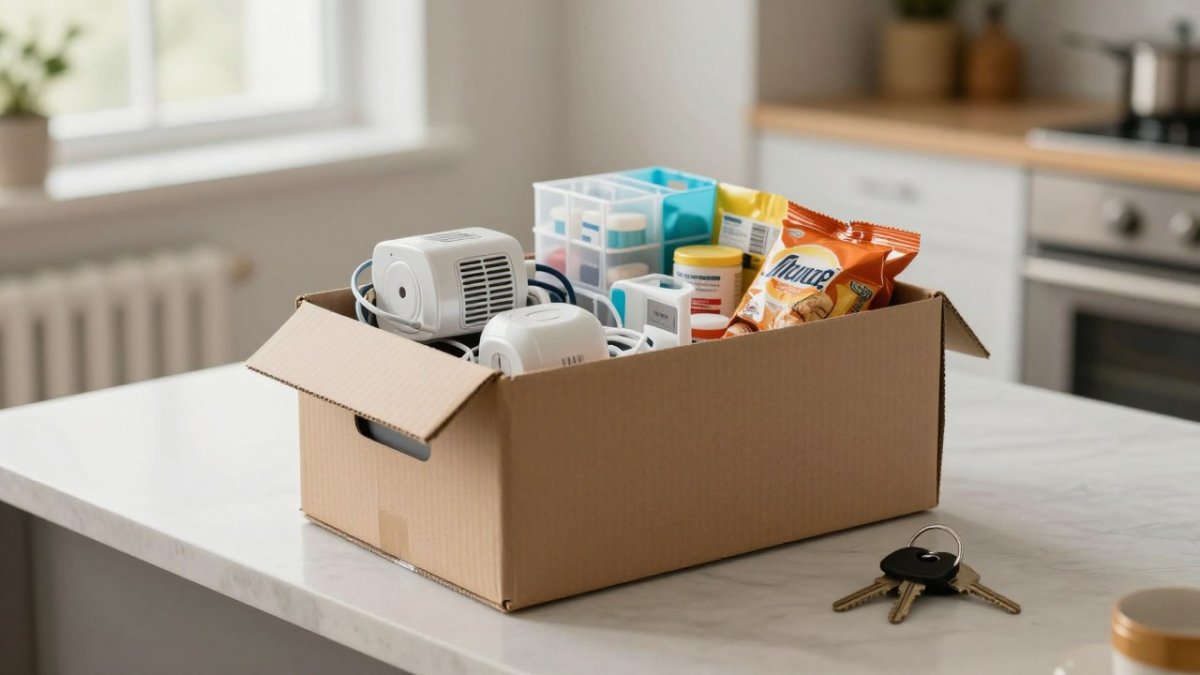
- Phone chargers and a power bank
- Medications and a small first aid kit
- Toiletries, toilet paper, and a towel
- Snacks and bottled water
- Keys, important documents, and cash
- Basic tools such as a screwdriver and box cutter
- A change of clothes for each person
Label the box clearly, such as “Open First.” This keeps the most important items within reach while the rest of the house is still a mess.
Step 7 to 10: Transit, Arrival and Settling In
The last four steps cover the journey, the unloading, and the first night.
Step 7: Follow the truck, or stay in touch with the crew. Keep your phone on and confirm the destination address. If you are driving separately, plan a route with time to spare.
Step 8: Meet the crew at the new home. Be there to direct placement. Decide in advance where the big furniture and boxes will go. Clear paths through the entryway first.
Step 9: Check off the unloading list. Count boxes against your inventory, and look for damage right away. Report any problems to the moving company on the day of delivery.
Step 10: Set up the first night. Make the bed, plug in the essentials, and get a basic kitchen working. Leave the full unpacking for the following days.
Moving Day Timeline Hour by Hour, Plus a Printable Checklist
Use this sample schedule as a starting point, then shift every time block to match your confirmed arrival window. The schedule assumes a local move with a mid-morning start; for a long-distance move, add a transit block and a check-in call at the halfway point.
| Time | Task | Owner | Buffer or decision point |
|---|---|---|---|
| 6:30 AM | Final walkthrough, utilities confirmed, essentials box staged by the door | Homeowner | If utilities are not active at the new home, call the provider before the crew arrives |
| 7:00 AM | Pets, children, and older adults settled in a quiet room or off-site | Homeowner | If supervision falls through, pause loading until a replacement arrives |
| 7:30 AM | Parking spot, elevator, and loading dock confirmed; paperwork and insurance on file | Homeowner | If access is denied, call the property manager before the crew unloads |
| 8:00 AM | Crew arrives; quick walkthrough with the lead mover | Lead mover and homeowner | If the crew is late, confirm a new ETA and hold the parking spot |
| 8:30 AM | Loading begins; photograph furniture, appliances, and valuables before they move | Crew and homeowner | If an item is already damaged, photograph it before loading and note it on the inventory |
| 10:30 AM | Mid-morning check: confirm truck space, note any items left behind | Homeowner | If the truck is full early, decide what stays and what is donated or stored |
| 12:00 PM | Final walkthrough of the empty home; keys, meters, and locks checked | Homeowner | If a closet or storage area is missed, load it before the truck departs |
| 12:30 PM | Truck departs; follow or stay in contact with the lead mover | Homeowner | If you are driving separately, share the route and a check-in time |
| 2:00 PM | Arrive at the new home; direct placement of large furniture first | Crew and homeowner | If the elevator or parking is blocked, hold unloading until access is cleared |
| 3:00 PM | Unload and count boxes against the inventory | Crew and homeowner | If a box is missing or damaged, note it on the delivery receipt before signing |
| 5:00 PM | Set up essentials: beds, kitchen basics, phone chargers, medications | Homeowner | If something essential is missing, check the essentials box before unpacking further |
| 7:00 PM | Settle in, plan the next day, and report any damage or missing items in writing | Homeowner | If damage is found, photograph it and report it the same day |
How to use the printable checklist
Copy the table onto a single sheet, tape it inside the essentials box, and mark each block as you finish it. Add three columns of your own: a time buffer, a phone number for the building manager or mover, and a notes line for anything that goes wrong. Keep the sheet with you rather than on the truck, because the truck may arrive before you do.
Contingency decision points
A plan that does not account for delays is not a plan. Build in buffer time before loading and before unloading. If bad weather hits, protect walkways with mats and confirm the crew has straps and blankets before loading. If the elevator or parking is blocked, consider holding the load rather than carrying items up stairs. If an item is damaged or missing, photograph it, note it on the delivery receipt before signing, and report it to the moving company in writing the same day so the claims process starts on time.
DIY versus professional: how the schedule changes
For a professional move, your blocks are access, supervision, and documentation; the crew owns loading and unloading. For a DIY move, add a truck inspection block before loading, a driver-and-director assignment, and a fuel and return-time check at the end of the day. For a long-distance move, add a transit block with a check-in call and confirm the delivery window in writing before the truck leaves.
Booking Mansa Movers for Your Next Step
If you are ready to plan your move and want a team that handles the timeline with you, book residential moving services with Mansa Movers to get started. Before you commit, read how to review transparent moving pricing so you know exactly what a quote covers. If you are still comparing budgets, see our Toronto moving cost guide for a clear picture of typical options.
Get your moving day plan right from the start. Our team at Mansa Movers can help you build a schedule that fits your home and your arrival window. Request your free moving quote today and let us handle the heavy lifting.
Frequently Asked Questions
What should I do first on moving day?
Start with a short walkthrough of the old home before anything leaves the property. Confirm your essentials box is with you, check that utilities are scheduled to end, and photograph each room to record its condition. Then confirm with your moving team the arrival time and the crew’s access details. Doing these first means that when the truck arrives, you are only managing the loading, not solving problems on the fly.
How early should movers arrive?
Arrival times are set when you book, so confirm the exact arrival window with your moving team. Confirm the exact arrival window when you book, and again the evening before. If the building has a freight elevator, a loading dock or parking restrictions, tell the team in advance so they can arrive with the right equipment and plan access time.
What is a good timeline for moving day?
Moving times depend on the size of the home and the distance, so confirm the expected timing with your moving team when you book. Plan your day in blocks for preparation, loading, transit and unloading, and allow extra time for traffic and for items that need extra handling.
What should I check before leaving my old home?
Do a final sweep of closets, drawers, cabinets, balconies and storage lockers. Check that the stove and fridge are unplugged and cleaned as your building requires, and confirm the water is shut off where necessary. Collect all keys, fobs and garage remotes, and leave the new address and your contact details with the building manager or landlord. Take final photos of each room for your records.
